What is our Story?

Since inception in 1992, FODEP has made significant contributions to the promotion of democracy and good governance at both national and regional levels. The following are some of our most notable contributions:
  1. FODEP successfully managed the Election Observation component of the Regional Project by the NGO Network for Electoral Support in Southern Africa (NGONESA) between 1998 and 2000, which was later renamed SADC electoral Support Network (SADC-ESN). Under this regional project, FODEP successfully coordinated the deployment of international observers to other countries (including Namibia in 1998; Mozambique in 1999, Zimbabwe in 2000, Tanzania in 2000, among others) under the umbrella of SADC-ESN, and participated in several regional election observer missions thereby contributing to enhanced integrity of elections in the sub-region.
  2. FODEP has also successfully monitored all presidential, parliamentary, by-election and local government elections since inception in 1992.
  3. With the support from the Netherlands Institute for Multi-Party Democracy (nIMD), FODEP contributed to strengthening of financial management capacities of political workshops on financial management for party leaders. This programme culminated into the establishment of a Political Party Bureau, and later into the establishment of the Zambia Centre for Interparty Dialogue (ZCID) in 2005.
  4. FODEP has also encouraged issue-based campaigns by political parties by organizing political party debates in all provinces. FODEP has also conducted activities on political party capacity building, decentralization policy awareness, HIV/AIDS electoral process and gender policy awareness.
  5. FODEP has also been able to initiate research, design and implement an effective advocacy strategy on governance issues.
  6. In its effort towards enhancing the electoral process, FODEP between 2002 and 2004 embarked on a robust Electoral Reforms Advocacy program, culminating into influencing Government’s establishment in 2024 of the Electoral Reforms Technical Committee (ERTC). FODEP later submitted its draft Electoral Bill to the ERTC and subjected the ERTC draft report to provincial discussions, thus contributing to wider participation of citizens in the electoral reform process as evidenced by submission in the ERTC report.
  7. The organization has managed to conduct civic/voter awareness campaigns during all major elections in Zambia, thereby contributing to increased voter turnout in the recent elections.
  8. FODEP has managed to mobilize and train several ward councilors in civic responsibilities, through its Country-wide District Councilor's Training & Orientation Workshops, thereby enhancing the understanding of their roles in local government
  9. FODEP has also contributed to increased networking and collaboration of NGOs and other stakeholders. The organization chaired the Electoral Commission of Zambia’s National Voter education Committee (NVEC). FODEP is also a member of the Civil Society for Poverty Reduction, Access to Information (ATI) Coalition, the Governance and Electoral Support Network (GESN) Zambia.
  10. With technical support from the NDI, FODEP successfully conducted the first post-1991 Parallel Vote Tabulation during the 2008 Presidential elections, which significantly enhanced stakeholder confidence in the 2008 Presidential Election Results announced by the ECZ.

Geographic Coverage

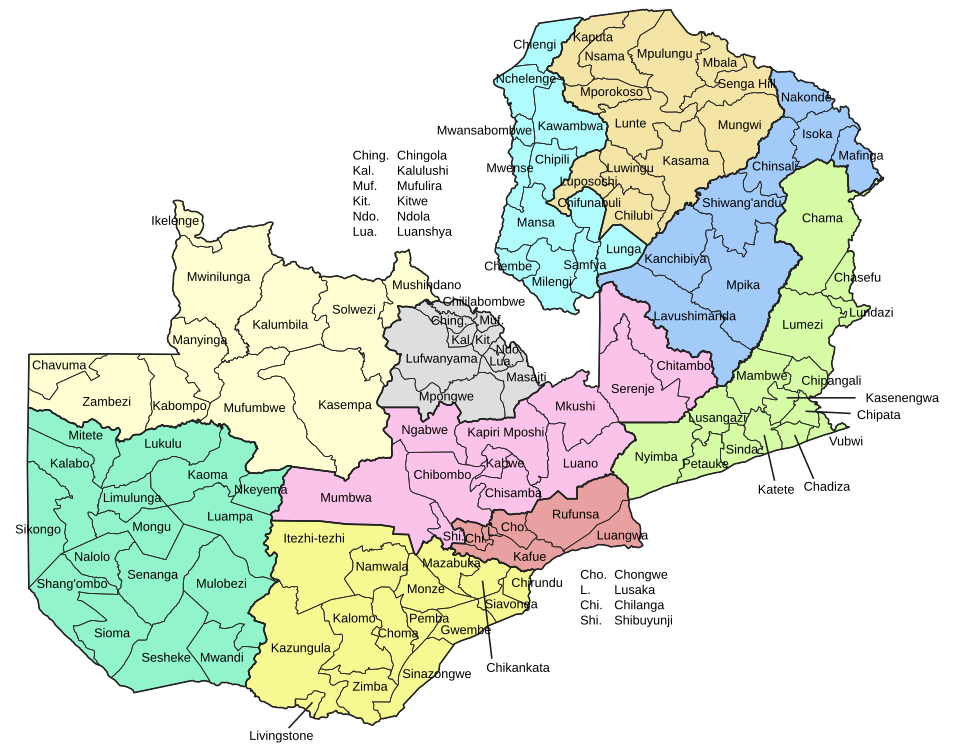
FODEP is a national organization with a decentralized operational model. While headquartered in Lusaka, the organization maintains functional structures comprising elected executive committees at:


National Level:

Strategic direction and policy advocacy.


Provincial Level:

Coordination of regional programs and stakeholder engagement.


District Level:

Grassroots mobilization, monitoring, and direct citizen interface.